Pour Over & Brewing
Gooseneck Kettle
A narrow spout that turns pouring into a controllable variable
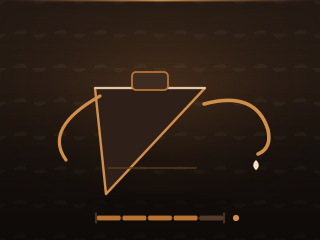 3D model available
Overview
A kettle with a thin, curved spout that delivers a slow, steady stream you can aim. Temperature control and pour control in one tool.
Steam from a just-boiled kettle scalds faster than the water does. Fill below the maximum line, keep the lid closed, and never pour toward your hand or across a power cord.
Technical parameters
| Capacity | 0.8–1.0 L |
|---|---|
| Temperature range | Variable, typically 40–100 °C |
| Accuracy | ±1–2 °C on variable models |
| Spout | Gooseneck, narrow bore |
| Material | Stainless with a heat-resistant handle |
| Power | Electric or stovetop |
What actually goes wrong
- Pour a test stream into a cup of water before brewing — it calibrates your hand.
- Fill to just above the amount you need; a heavy kettle is an unsteady one.
- For dark roasts try 88–92 °C, for light roasts 92–96 °C.
What it has to match up with
- V60, Chemex or any dripper
- Coffee scale
- Burr grinder
The Pour Over Simulator models this in three dimensions and shows the numbers changing as you adjust it. It is a teaching simulation, not a substitute for the equipment’s own instructions.
This guide is an independent educational reference. It is not a substitute for the instructions supplied with your own equipment, and nothing here is sold, sponsored or endorsed by any brand.
Related guides
Read next
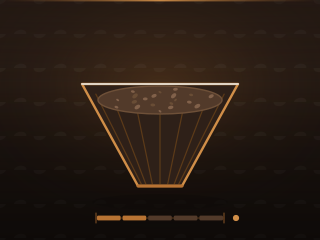
Pour Over & BrewingBrew3D
V60 Dripper
A 60-degree cone with spiral ribs and one large hole
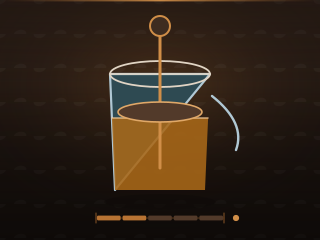
Pour Over & BrewingBrew
French Press
Full immersion, full body, no filter paper
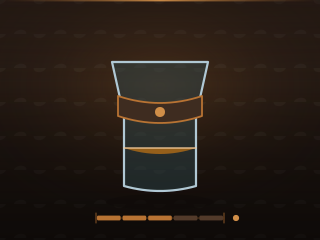
Pour Over & BrewingBrew
Chemex
A glass flask with a bonded paper filter
Pour Over & BrewingBrew
AeroPress
A pressurised immersion brewer that finishes in a minute