Brew & Bar — a coffee and cocktail tool reference with 3D simulators and calculators
Coffee & cocktail reference
Build a station you can actually repeat
Twenty-eight tool guides, three calculators, four interactive 3D simulators and a sortable equipment database — written as a reference, not a shop.
Written and maintained as a reference. No products sold, no sponsored mentions.
Where a recommendation comes from a coffee or bar community, the source is named.
Four interactive models, no sign-in, no library loaded unless you open one.
Hot water, steam, pressurised boilers and alcohol all carry real risks. Every guide says so.
What people say
Advice that keeps coming up
Four recommendations that recur across the coffee and cocktail communities. Each one links to the guide that explains it.
r/espressoReddit communityRead the guideA good grinder changes everything. The WDT tool was the best cheap upgrade.
r/BreadReddit communityRead the guideDigital scale and Dutch oven are the two game changers.
Cocktail community guideCommunity guideRead the guideA Boston shaker is durable, easy to clean, and will not get stuck the way cobbler shakers do.
r/CafelatRobotReddit communityRead the guideScale, grinder, kettle, mittens, extra portafilter, WDT tool — and you should be good to go.
Browse by category
Five categories, twenty-eight guides
Every guide carries a specification table, a technical parameter table, a specific safety note and what the tool has to match up with.
6 tools
Espresso & Coffee
The pressurised end of the counter: the machine, the basket the coffee sits in, and the small tools that decide whether the puck is level before water ever touches it.
6 tools
Grinders & Scales
The two pieces of equipment that change coffee more than any machine: something that grinds consistently, and something that measures to a tenth of a gram.
6 tools
Pour Over & Brewing
Every method where water meets coffee without pressure: a controlled pour, a cone, an immersion press or a stove-top pot.
5 tools
Cocktail & Bar
Five tools that cover every classic cocktail technique: shaking, stirring, straining and measuring, without a drawer full of gadgets.
5 tools
Cleaning & Maintenance
The unglamorous half of good coffee. Rancid oils and scale are the two most common causes of a drink that tastes wrong for no visible reason.
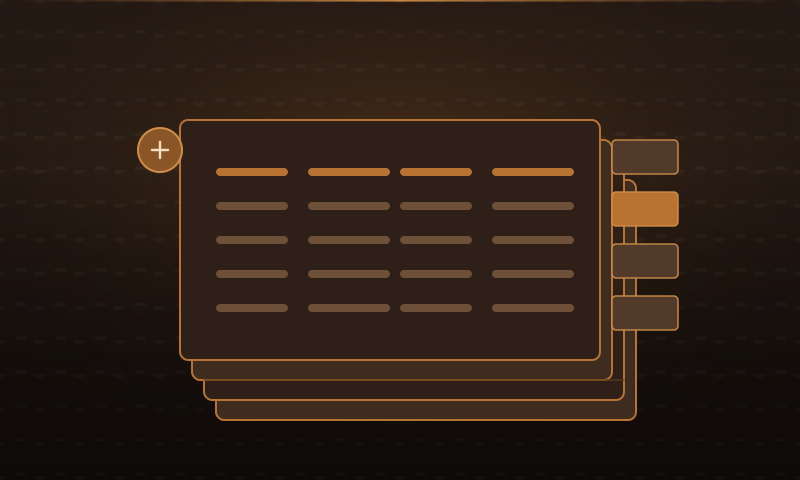
Database
Equipment & recipe database
Every tool in one sortable table — station type, brew method, weight, price band — with a side-by-side comparison.
How it works
Four steps, in this order
The order matters more than the equipment. Most bad cups come from a step that was skipped, not a tool that was missing.
- STEP 1
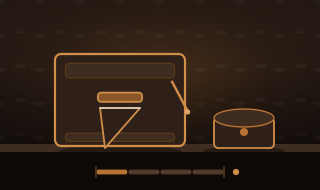
Select & setup
Pick one method and the equipment it needs. Set the machine up where you will actually use it.
- STEP 2
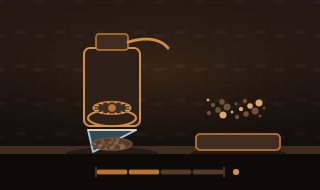
Grind & measure
Weigh the dose, grind to the setting, and distribute before tamping. This is where most problems start.
- STEP 3
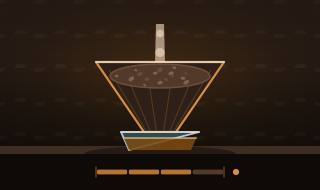
Brew & pour
Watch the numbers — yield in grams and time in seconds — and change one variable at a time.
- STEP 4
Clean & serve
Rinse, brush and backflush. A clean machine is the cheapest improvement to tomorrow’s cup.
The 3D Studio
Watch the shot before you pull it
A live model of a pour over: drag the kettle to change the pour, and the bed, the bloom and the accumulated yield respond as they would in the cup. It is a teaching model, not a game — every figure it shows is calculated from the parameters.
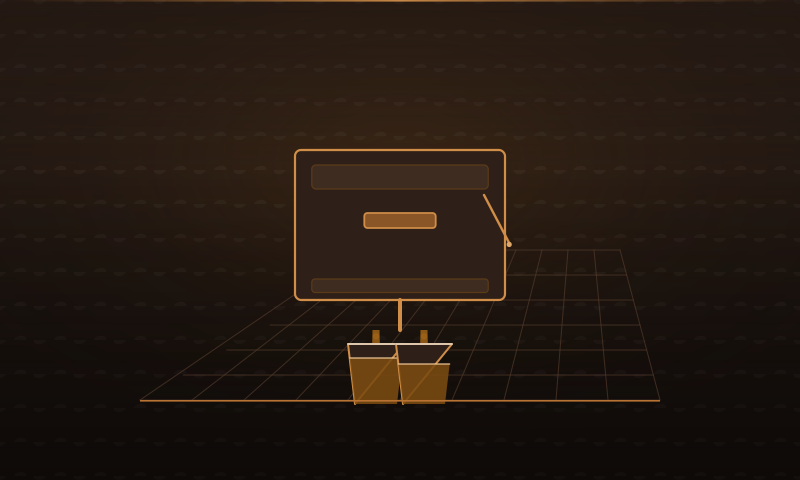
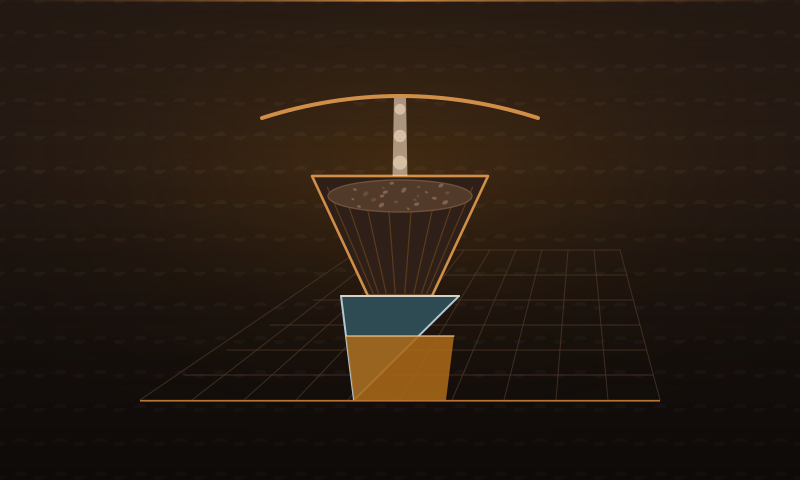
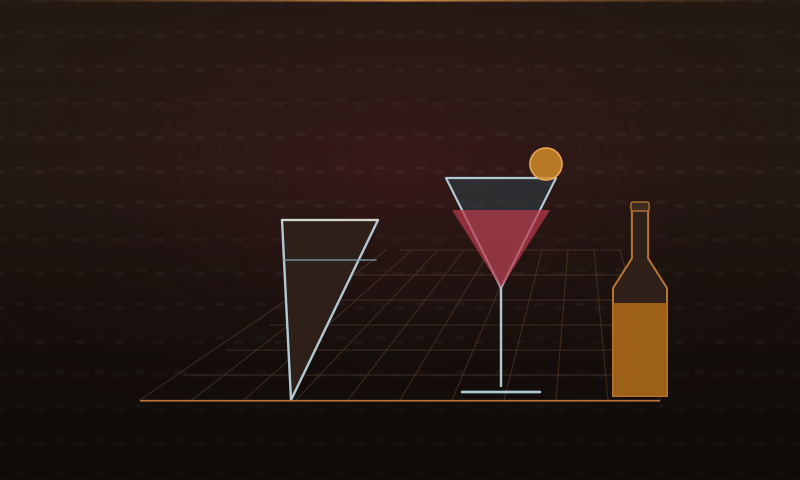
Every figure below is still calculated — only the interactive model is unavailable on this device.
Drag to rotate. The model is a teaching simulation — real equipment follows its own instructions and safety limits.
Asked in the communities
Real questions, short answers
Questions that come up repeatedly in the coffee communities, with a condensed answer and a link to the full guide.
Quick reference
Brew troubleshooting
The six symptoms that account for most disappointing cups, what each one means, and the single change that usually fixes it.
| Symptom | Likely cause | Quick check | What to change | Source |
|---|---|---|---|---|
| Espresso runs too fast | Grind is too coarse | Is the puck loose and watery after the shot? | Grind finer, and distribute with a WDT tool before tamping. | r/espresso |
| Espresso runs too slow | Grind too fine, or too much coffee in the basket | Is the puck compressed against the shower screen? | Grind coarser or reduce the dose. Do not simply tamp harder. | r/espresso |
| Bread dough is too sticky | Too much water, or flour with too little protein | What is the protein percentage on the flour bag? | Hold back water or switch to a higher-protein flour; use a bench scraper to handle it. | r/Bread |
| Pour over tastes weak and thin | Water too cool, or under-extracted | Is the water actually at temperature when it hits the bed? | Raise the water to 92–96 °C and lengthen the brew, or grind finer. | r/CafelatRobot |
| Cocktail is too sweet | Too much syrup for the spirit | Was the syrup measured with a jigger or poured freehand? | Measure with a jigger and cut the syrup, or add a dash of citrus or bitters. | Cocktail community guide |
| Bread burns on the base | Oven base is too hot | Which shelf is the tin on, and is there a baking stone? | Move the tin up a shelf, or bake inside a covered Dutch oven. | r/Bread |
Most read
Popular tool guides
The nine guides people open first, ordered by how often they are read.
Espresso & CoffeeBrew3D
Espresso Machine
The pressure source, and the only tool that decides the ceiling
Grinders & ScalesGrind3D
Burr Grinder
The single biggest upgrade to any coffee setup
Pour Over & BrewingBrew3D
Gooseneck Kettle
A narrow spout that turns pouring into a controllable variable
Grinders & ScalesGrind
Coffee Scale
Measures the two numbers that make a recipe repeatable
Grinders & ScalesGrind
WDT Tool
The cheapest upgrade that changes the most
Pour Over & BrewingBrew3D
V60 Dripper
A 60-degree cone with spiral ribs and one large hole
Cocktail & BarServe3D
Boston Shaker
Two tins that seal by friction and never seize
Espresso & CoffeeSetup
Portafilter
The handle that carries the basket and locks into the group
Grinders & ScalesGrind3D
Hand Grinder
The same burr geometry, driven by hand
Calculators
Three calculators, no sign-in
Each one shows the formula it used, so you can check the answer rather than trust it.
Related discussions
Threads behind these guides
Where a recommendation came from a community thread, this is the thread.
From the blog
Featured reading
Longer pieces that explain the reasoning behind the guides.
Beginner9 min read
How to Start Your Coffee Station: A Beginner’s Guide
What to buy first, what to skip entirely, and why the order you spend your money in matters more than the budget.
Espresso11 min read
Espresso Extraction: Dialing In Your Grinder
Grind is the only variable worth changing first. Here is how to read a shot, and what each symptom is telling you.
Pour Over10 min read
Pour Over Basics: V60, Chemex, and Kalita
Three cones, three different characters, and the four variables that decide which one suits you.
Start with the tools, or start with a method
Twenty-eight guides, four simulators and three calculators — all free, none of it sponsored, and no account required.
Common questions
Frequently asked questions
The five questions that come up most often before someone builds their first station.
What tools do I need for my first espresso setup?
The essentials are a scale, a grinder, a kettle, mittens, an extra portafilter and a WDT tool. A scale reading to 0.1 g and a gooseneck kettle are the two most-recommended additions. A good grinder makes the biggest difference of anything on the list — it sets the ceiling on every shot that follows.
What is the best cheap upgrade for espresso?
A WDT tool. It is inexpensive and it improves extraction consistency noticeably by breaking up clumps in the grounds before tamping. A dosing cup or a dosing funnel is also a good cheap addition, and a bottomless portafilter is the cheapest way to see what your extraction is actually doing.
What is a game changer for bread making?
A digital scale and a Dutch oven. Those two do not have good alternatives. A bench scraper is nice but a flat-edged spatula works fine. A digital scale is non-negotiable for consistent results, because most failures trace back to a dough that was never measured properly.
What are the essential bar tools for a beginner?
A Boston shaker (two weighted stainless steel tins), a Hawthorne strainer with its spring, a jigger for measuring and a bar spoon for stirring. A mixing glass is optional but worth it for stirred drinks. Skip plastic shakers — they crack and they stain.
How do I build a coffee station on a budget?
Start with the grinder and the scale, because those two have the biggest effect on quality. Buy the middle of the range rather than either extreme, and check secondhand listings for equipment people bought and did not use. Try a method before committing to an expensive machine for it.