Grinders & Scales
Burr Grinder
The single biggest upgrade to any coffee setup
 3D model available
Overview
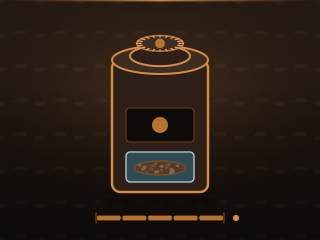
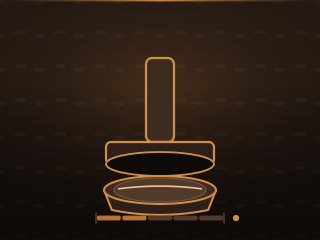
A grinder that crushes beans between two hardened burrs set a fixed distance apart. Because the gap is fixed, the particles come out in a narrow band of sizes — which is what makes extraction repeatable.
Never reach into the burr chamber or the chute with the grinder plugged in. Unplug before clearing a jam, and keep the hopper closed while running.
Technical parameters
| Burr type | Flat or conical, hardened steel |
|---|---|
| Adjustment | Stepped or stepless |
| Espresso range | Verify explicitly — not all burr grinders reach it |
| Retention | Low retention preferred for single dosing |
| Typical noise | 75–90 dB |
| Burr life | 500–1200 kg of coffee before replacement |
What actually goes wrong
- Change grind size in small steps and pull a shot after each one; large jumps overshoot and waste beans.
- Purge a few grams when you change beans or setting — the first dose is mostly the previous one.
- Brush the chute weekly. Old grounds go stale and taint every following dose.
What it has to match up with
- Basket sized for the dose
- Dosing funnel
- WDT tool
- Coffee scale
The Grind Size Visualizer models this in three dimensions and shows the numbers changing as you adjust it. It is a teaching simulation, not a substitute for the equipment’s own instructions.
This guide is an independent educational reference. It is not a substitute for the instructions supplied with your own equipment, and nothing here is sold, sponsored or endorsed by any brand.
Related guides
Read next
Grinders & ScalesGrind
Coffee Scale
Measures the two numbers that make a recipe repeatable
Grinders & ScalesGrind
WDT Tool
The cheapest upgrade that changes the most
Grinders & ScalesGrind3D
Hand Grinder
The same burr geometry, driven by hand
Grinders & ScalesGrind
Distribution Tool
Levels the bed before the tamper goes in