The equipment gets all the attention and the layout decides whether any of it gets used. A station where you have to move things to make a coffee is a station that becomes a shelf.
The four constraints
- Power — a machine and an electric kettle together can exceed a single kitchen circuit. Check before you commit to a position.
- Water — a machine needs filling and a kettle needs filling. Distance to a tap is the difference between daily use and occasional use.
- Height — a machine under a wall cabinet may not fit a cup under the group, let alone a pitcher under the wand.
- Splash — the grinder, the tamping area and the knock box all make a mess. A tray or a mat under the working area saves the counter.
| Counter depth | Machine depth + 10 cm clearance |
|---|---|
| Headroom | Machine height + cup + pitcher under the wand |
| Power | Machine + kettle on separate circuits if possible |
| Water access | Within a comfortable carry of the tap |
Three zones, left to right
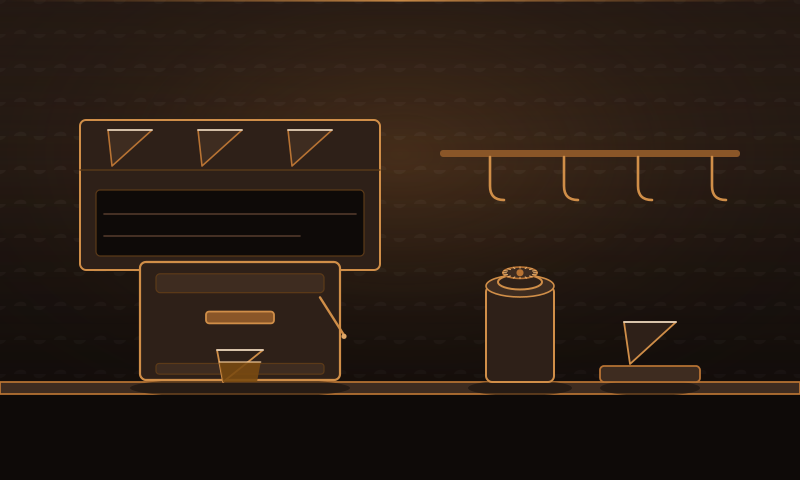
A workable station is a sequence, and the sequence runs in one direction. Set it up so you never cross back over yourself.
Grind and dose zone
Grinder, scale, dosing cup and the WDT tool. This is where the mess happens, so put it at the end you can wipe down.
Brew zone
Machine or dripper, with the knock box immediately beside it. Nothing should have to travel between the group head and the box.
Serve zone
Cups, pitcher, and the bar tools if you are sharing the counter with cocktails.
Sharing the space with a bar
Coffee and cocktails want the same things — a hard surface, water, storage, and a spot for a scale — so they share well if you keep the tools separate. The essential bar tools are small enough to live in one shallow drawer: shaker tins, a strainer, a jigger and a bar spoon.
Keep spirits out of reach of children, out of direct sun and away from a hot kettle or machine. Do not store a bottle you cannot identify, and never decant into an unlabelled container.
Storage that survives contact with use
| Item | Storage | Why |
|---|---|---|
| Beans | Airtight, dark, room temperature | Heat, light and air all stale coffee |
| Grinder | On the counter, not a cupboard | You will not use what you have to unpack |
| Bar tools | One shallow drawer, lined | Chrome chips against steel in a loose drawer |
| Glassware | Upright, with room above | Stacked glasses chip at the rim |
| Spirits | Upright, dark, locked if children are present | Safety and flavour both |
| Cleaning kit | With the machine, not in a cupboard | The step you can reach is the step that happens |
Where the money should go
Spend on the grinder and the scale before the machine, because those two change the quality of every drink. Spend on the workflow before the decoration — a tray, a knock box and a mat cost very little and are used every single day. And buy one method at a time: a station with four brewing devices and no routine makes worse coffee than a station with one.
Test the workflow with water
Before you buy anything, walk the sequence with an empty cup: grind, dose, tamp, brew, knock, serve. If any step means moving something out of the way, the layout is wrong.
If you are starting from nothing, the beginner’s station guide covers what to buy in what order.
This guide covers hot water, steam, pressurised equipment and, in places, alcohol. Follow the instructions supplied with your own equipment, ventilate when you clean or descale, keep spirits out of reach of children, and drink responsibly.